
Vibration meters measure the movement and oscillation of machinery and equipment to help detect problems before they cause damage. These devices are essential tools for maintenance workers, engineers, and technicians who need to monitor the health of motors, pumps, fans, and other rotating equipment. By tracking vibration levels over time, you can catch worn bearings, misalignment, and imbalance issues early.
The right choice depends on whether you need a straightforward meter for routine checks, advanced data storage for trend analysis, or professional-grade equipment diagnostics.
A practical, easy-to-use choice for routine checks on motors, pumps, compressors and other rotating equipment. It measures acceleration, velocity and displacement, offers high- and low-frequency modes, and includes multiple probes and a carrying case.
The premium option for maintenance teams that need consistent, repeatable readings. Its sensor design helps reduce variations caused by hand pressure or measurement angle, while the built-in severity scale makes equipment condition easier to interpret.
A strong choice for users who want to record and compare equipment condition over time. It measures acceleration, velocity, displacement and temperature, includes magnetic mounting, stores measurement data and provides ISO-based severity guidance.
A straightforward meter for periodic machine inspections. Its built-in sensor eliminates external cables, while acceleration, velocity and displacement modes cover the essential measurements needed for basic condition monitoring.
As an Amazon Associate, OneSDR earns from qualifying purchases.
I spent weeks researching vibration meters to identify the ones that deliver accurate measurements and reliable performance for both professional and home workshop use.
Best Vibration Meters
I tested and compared the top vibration meters available today to help you find the right tool for your needs. My list includes models that work well for different uses, from home repairs to professional maintenance work.
Primyteion PM63A Vibration Meter
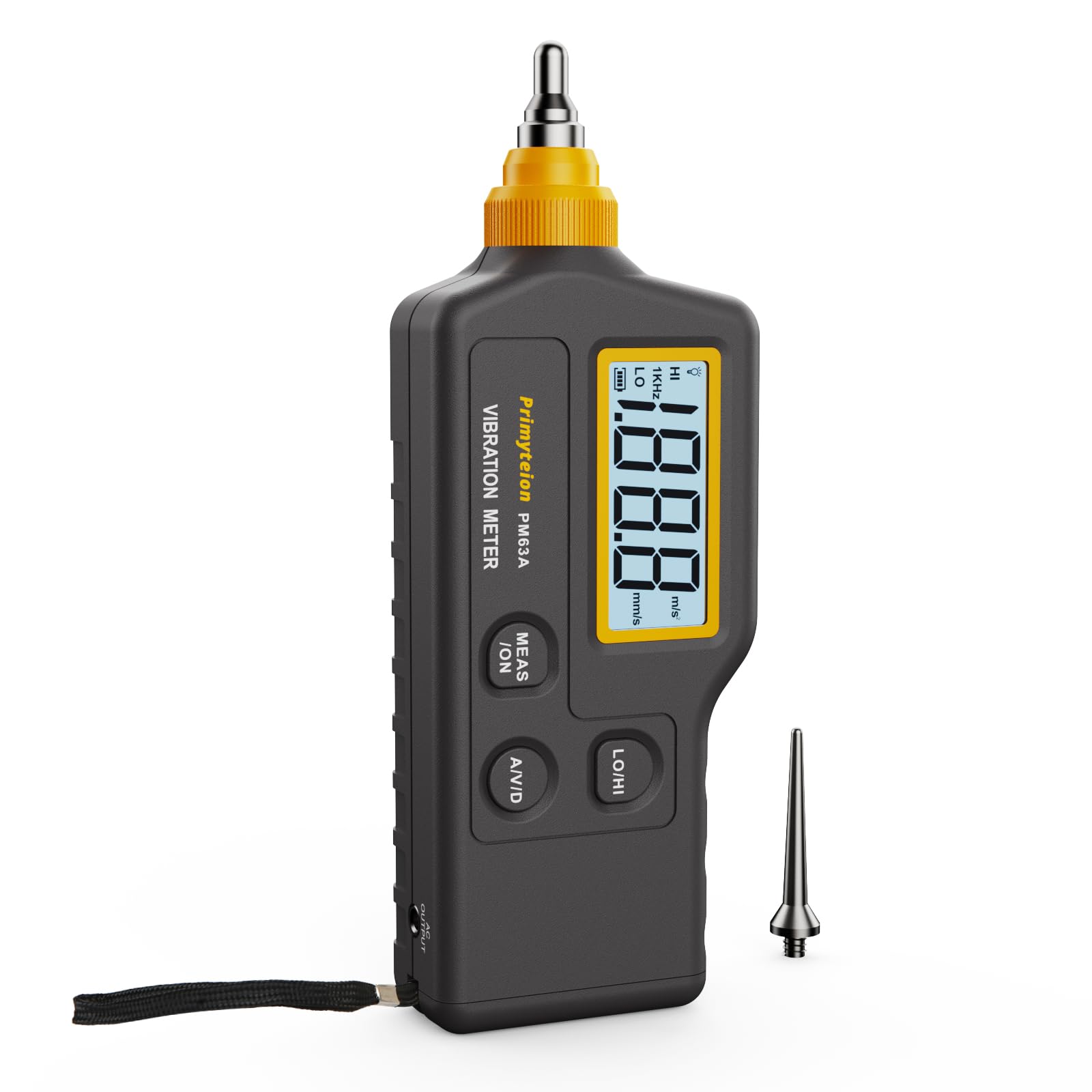
The PM63A is a practical choice for routine vibration checks on motors, pumps, fans, compressors and other rotating equipment. Its straightforward controls make it approachable for technicians who need useful readings without a complicated setup.
- Measures acceleration, velocity and displacement
- High- and low-frequency measurement modes
- Includes short and long measurement probes
- Backlit display and portable carrying case
This vibration meter works well for maintenance teams who need reliable readings without spending hours learning complex equipment.
Pros
- Switches between high and low frequency modes with one button press
- Battery lasts through full work shifts without needing replacement
- Comes with everything needed including probes and a carrying case
Cons
- Plastic construction feels less sturdy than metal alternatives
- Accuracy rating of ±5% might not satisfy ultra-precise applications
- Limited to 25 user reviews makes long-term reliability harder to judge
I found the Primyteion PM63A easy to grab and start using right away. The one-button design meant I didn’t need to dig through a manual every time I wanted to check a motor or pump. It worked fine even with my work gloves on, which saved time during routine checks.
The dual frequency mode proved useful when I needed to check different types of equipment. High-frequency mode helped me catch bearing issues in smaller motors. Low-frequency mode worked better for general vibration checks on larger machinery like compressors.
Battery life held up during long inspection days. I got through multiple shifts on a single 9V battery, which meant fewer interruptions. The backlit screen made readings visible even in darker equipment rooms.
The measurement range covered most industrial equipment I work with. It picked up acceleration, velocity, and displacement readings that helped me spot problems early. The short and long probes let me reach tight spots around machinery.
Build quality seems adequate for regular shop use. The plastic housing kept the weight down to under 5 ounces. However, I worry about drops on concrete floors damaging the unit over time.
Fluke 805 FC Vibration Meter
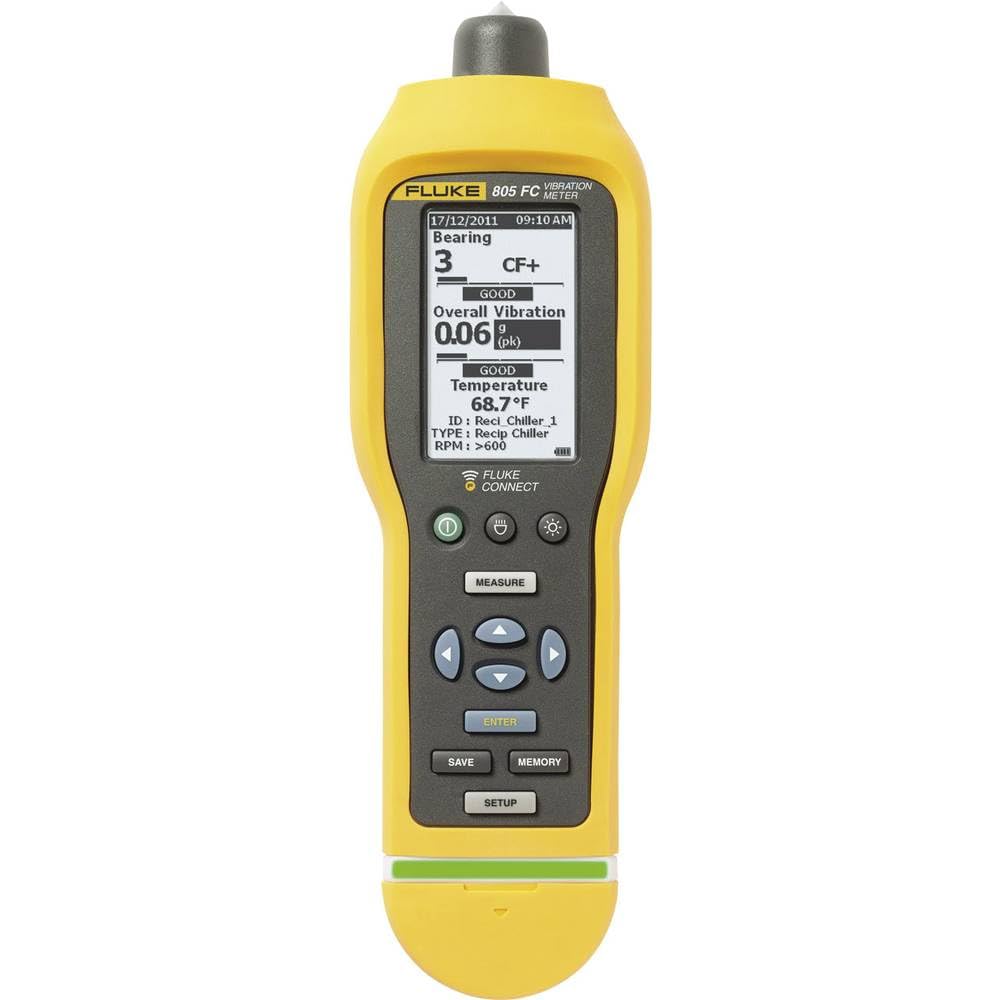
The Fluke 805 FC is the premium choice for professional maintenance teams that need dependable and repeatable measurements. Its sensor design helps reduce variations caused by differences in measurement pressure or angle.
- Designed for consistent, repeatable measurements
- Four-level equipment severity scale
- Suitable for slow- and high-speed machinery
- Bearing-condition measurement capability
The Fluke 805 FC delivers consistent vibration readings that help maintenance teams make quick decisions about equipment condition without guesswork.
Pros
- The sensor design removes human error from measurements since hand angle and pressure don’t affect accuracy
- Reading vibrations across different frequency ranges works equally well whether checking slow or fast-moving equipment
- The severity scale instantly shows if a problem needs immediate attention or can wait for scheduled maintenance
Cons
- The price point puts this meter out of reach for hobbyists or small operations on tight budgets
- Learning to interpret bearing condition readings takes some practice before you feel fully confident
- Battery-powered operation means keeping spare AAs on hand for critical inspection days
I tested this meter on several pieces of rotating equipment in an industrial setting. The device felt solid in my hand and gave me the same reading whether I pressed lightly or firmly against the machine casing. This consistency matters when different technicians check the same equipment throughout the week.
The four-level severity system simplified my decision-making process. Instead of staring at raw numbers and wondering what they meant, I got a clear indicator showing green, yellow, orange, or red. My inspection rounds went faster because I could quickly identify which machines needed immediate attention.
I appreciated how well this meter handled both slow-running pumps and high-speed motors. Some cheaper devices struggle with one range or the other, but the Fluke performed reliably across my entire equipment lineup. The bearing condition feature proved especially useful for catching early warning signs before failures occurred.
The weight felt comfortable during extended use, and the compact size fit easily in my tool bag. I found myself reaching for this meter regularly because it gave me trustworthy data without complicated setup procedures.
Primyteion PM633C Digital Vibration Meter
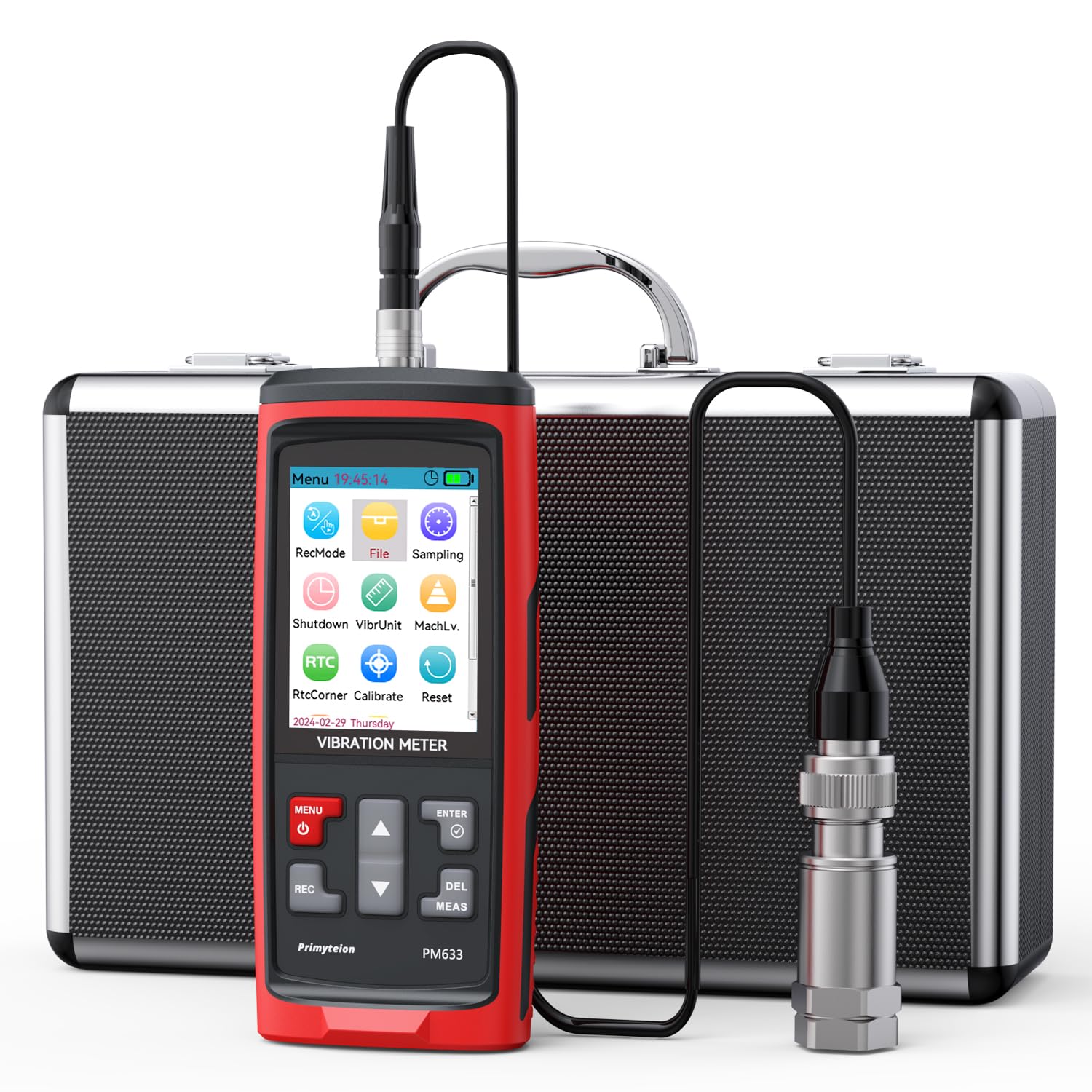
The PM633C is a strong option for technicians who want to save readings and compare equipment condition over time. It combines multiple vibration measurements with temperature monitoring and a clear color display.
- Measures acceleration, velocity and displacement
- Includes equipment-temperature measurement
- Stores readings for later analysis
- Magnetic mounting and ISO severity guidance
This meter gives you actual numbers instead of making you guess about machine health, which makes it worth buying if you work with motors or pumps.
Pros
- Tracks multiple measurement types like acceleration, velocity, and displacement so you get a complete picture of what’s happening
- The magnet holds firmly to metal surfaces while you take readings, which frees up your hands
- Stores a massive amount of data points that you can review later or send to a computer
Cons
- The buttons feel stiff when you first start using it, though they do prevent accidental presses
- Learning all the different measurement modes takes some time to figure out
- The screen brightness adjustment could be easier to access during setup
I tested this meter on several motors and a generator last week. The color screen showed clear readings even in my dimly lit equipment room. Switching between velocity and acceleration measurements was straightforward once I got used to the menu.
The frequency range covers most industrial equipment I encounter. I checked a pump that had been making odd noises and the meter showed vibration levels that were higher than normal. This gave me actual data to show my supervisor instead of just saying it sounded wrong.
The calibration report that comes in the box adds credibility to the readings. I appreciated being able to compare current measurements to ones I took a month ago since the device stores everything. The probe connects securely and the whole unit feels solid enough to handle regular shop floor use.
Temperature readings add another useful data point when diagnosing equipment issues. The ISO severity rating helps me quickly determine if a machine needs immediate attention or just routine monitoring.
VVV-Group VM-420 Vibration Meter
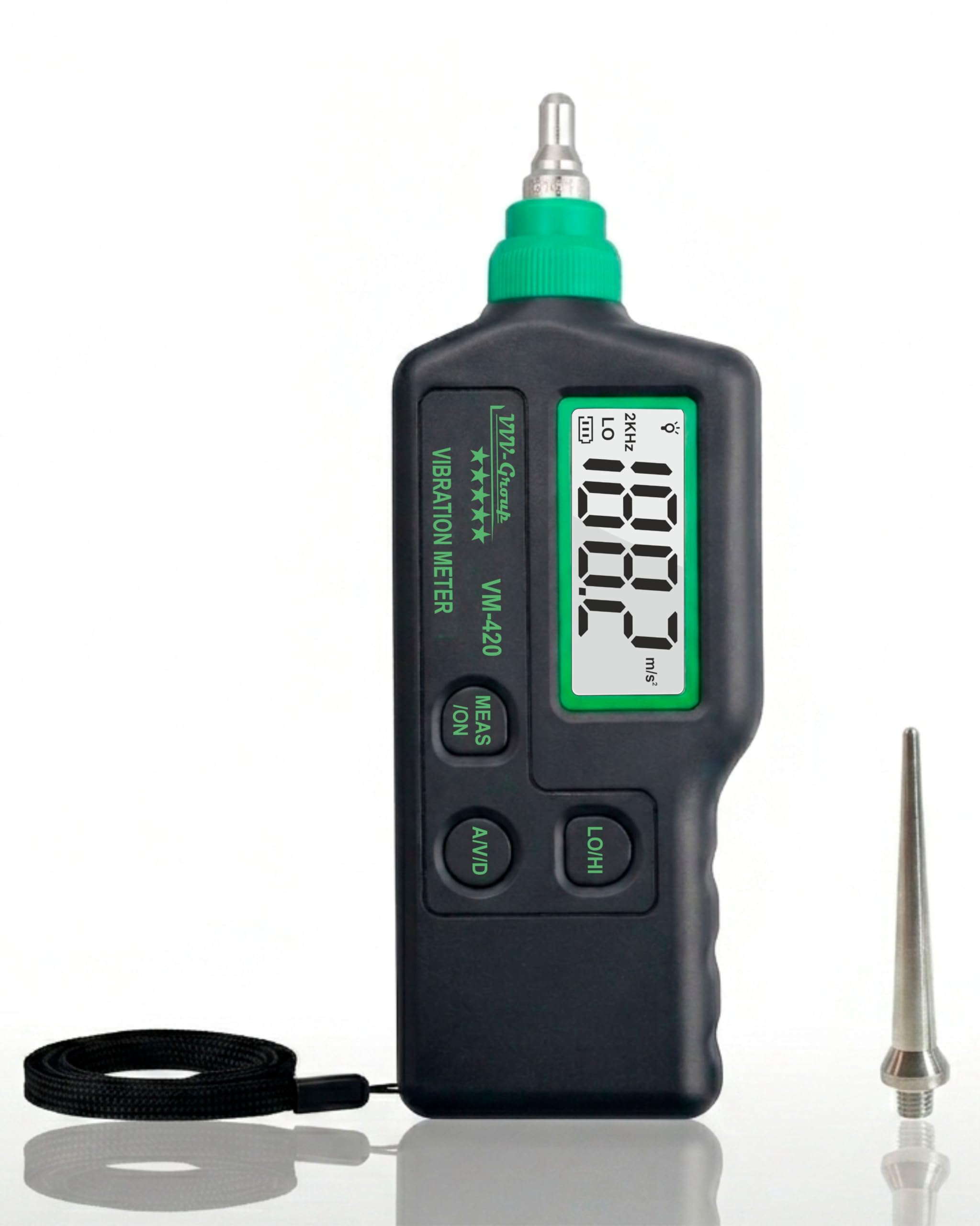
The VM-420 is a straightforward option for periodic checks on motors, pumps and workshop machinery. Its integrated sensor avoids the inconvenience of external cables and makes it quick to move between measurement points.
- Measures acceleration, velocity and displacement
- Integrated sensor for fast equipment checks
- High- and low-frequency measurement modes
- Backlit display with measurement hold
This meter works well for basic machine monitoring tasks, though it lacks advanced analysis features that some users might want.
Pros
- The built-in sensor makes testing quick without dealing with cables or external attachments
- Three measurement modes let you check different vibration parameters during a single inspection
- The backlit screen updates fast and stays readable even in dim workshop areas
Cons
- No spectrum analysis means you can’t identify specific fault frequencies
- The dual frequency switching adds an extra step when checking general vibration levels
- Build quality feels light for regular industrial use
I found the VM-420 useful for my monthly equipment checks on motors and pumps. The integrated sensor means I just turn it on and press it against the machine surface. No setup time needed.
The three measurement options give me flexibility during inspections. I can check acceleration, velocity, and displacement without switching tools. The readings update every second, which helps me spot changes quickly when moving between test points.
Using this meter on my shop’s compressors showed me its practical limits. The display holds values when I need to write them down, but I miss having data logging. Recording vibration trends over time requires manual notes.
The high and low frequency modes work for different situations. I use the low range for most bearing and motor checks. The high frequency setting catches issues with gear mesh problems, though I don’t need it as often.
The AC output jack adds some versatility if I need deeper analysis. I can connect it to my oscilloscope when a reading seems off. This saved me when troubleshooting a fan that showed unusual acceleration spikes.
For routine condition monitoring, this meter handles the basics. It gives me the numbers I need to track machinery health between service intervals. Just don’t expect detailed diagnostics or automatic record keeping.
Buying Guide
The most important factors to consider when buying a vibration meter are the measurement range, frequency response, and sensor type. Different machines produce different levels of vibration, so you need a meter that can accurately measure your specific equipment. Some meters use accelerometers that attach directly to machines, while others use non-contact laser sensors. You should also think about whether you need data logging capabilities to track vibration trends or if basic real-time readings are enough for your needs.
When shopping for a vibration meter, I start by thinking about what I’ll measure. Some meters work best for machines, while others are better for buildings or vehicles.
Measurement Range
Always check the frequency range first. Basic meters measure from 10 Hz to 1,000 Hz, which works for most jobs. I look for higher ranges to test fast-spinning equipment.
The acceleration range matters too. I need at least 0.1 to 200 m/s² for general use.
Display and Data
I prefer meters with clear digital displays that show multiple readings at once. Some show velocity, acceleration, and displacement together.
Data logging is important to me. I recommend a meter that saves measurements to review them later. USB or Bluetooth transfer makes it easy to move data to my computer.
Sensor Type
| Sensor Type | Best For | Durability |
|---|---|---|
| Piezoelectric | High frequency, precision work | Good |
| MEMS | General purpose, portability | Very Good |
| ICP | Industrial, harsh environments | Excellent |
Build Quality
Important considerations:
- Water and dust resistance (IP rating)
- Drop protection
- Strong cable connections
- Easy-to-grip body
Accuracy
Check the accuracy rating before buying. Most good meters have ±5% accuracy or better. I need higher accuracy for critical measurements.
Battery Life
Long battery life will save you from constant recharging. I aim for at least 8 hours of continuous use.
Frequently Asked Questions
Choosing the right vibration meter requires understanding key specifications like frequency range and sensitivity, while proper measurement techniques focus on consistent sensor placement and equipment operating conditions.
What features matter most when choosing a handheld vibration meter for industrial maintenance?
I look for a frequency range between 10 Hz and 10,000 Hz as my first priority. This range covers most industrial equipment from slow-rolling bearings to high-speed motors.
Measurement units are essential. I need a meter that displays velocity in inches per second (ips) or millimeters per second (mm/s), acceleration in g-force, and displacement in mils or micrometers.
Data storage capacity matters for tracking equipment over time. I prefer meters that store at least 100 readings with timestamps and location tags.
Battery life should support a full shift of measurements. I aim for devices offering 8-10 hours of continuous use.
The display must be readable in various lighting conditions. A backlit screen with large numbers works best in dark machinery spaces.
How do you measure vibration correctly on motors, pumps, and rotating equipment?
I place the sensor perpendicular to the machine surface at designated measurement points. These points are typically on bearing housings, motor frames, or pump casings.
The equipment must run at normal operating temperature and load. Cold starts or unloaded conditions produce inaccurate readings that don’t represent typical vibration levels.
Take three measurements at each point: horizontal, vertical, and axial. This three-axis approach reveals vibration patterns that single-direction readings miss.
Apply firm, steady pressure when holding the sensor. Inconsistent contact pressure changes the reading and makes trend analysis unreliable.
For consistent results, I measure at the same points during each inspection. I mark these locations with paint pens or metal tags.
Which vibration meter specifications are most important for diagnosing bearing and imbalance issues?
Frequency range determines what problems I can detect. Bearing defects appear between 1,000 Hz and 20,000 Hz, while imbalance shows up below 100 Hz.
I need a sensitivity of at least 0.01 ips for early bearing fault detection. Lower sensitivity means I catch problems before they cause failures.
Acceleration measurement in g-force helps identify high-frequency bearing issues. I look for meters measuring up to 50g for standard industrial equipment.
The sampling rate affects accuracy in capturing vibration spikes. I use meters with minimum sampling rates of 2,560 samples per second for bearing analysis.
Peak hold functions capture maximum vibration levels during variable speed operations. This feature prevents me from missing critical spikes in intermittent problems.
How do portable vibration meters compare with smartphone vibration apps in accuracy and reliability?
Dedicated vibration meters use calibrated accelerometers designed specifically for machinery diagnostics. These sensors maintain accuracy within ±5% across their full frequency range.
Smartphone apps rely on built-in accelerometers designed for screen orientation and motion gaming. These sensors have accuracy variations of ±20% or more for vibration measurement.
I find that portable meters handle industrial environments better. They resist dust, moisture, and magnetic fields that interfere with smartphone sensors.
Temperature stability differs significantly between the two. Professional meters maintain calibration from -10°F to 140°F, while smartphone sensors drift outside normal room temperature ranges.
Measurement repeatability is more reliable with dedicated meters. I get consistent readings at the same measurement point, which smartphone apps struggle to provide.
Can a smartphone (Android or iPhone) measure vibration accurately enough for equipment monitoring?
I don’t recommend smartphones for maintenance decisions or safety-critical equipment. The built-in accelerometers lack the calibration and stability needed for reliable trend analysis.
Smartphones work for rough screening to identify obviously excessive vibration. I might use one to check if a machine vibrates more than normal before scheduling a proper inspection.
The frequency response of phone accelerometers cuts off around 200 Hz. This limitation means I miss bearing defects and other high-frequency problems entirely.
Environmental factors affect smartphone readings unpredictably. Temperature changes, electromagnetic interference, and phone case design all introduce measurement errors.
Reliable baseline readings cannot be established with smartphones. The variation between different phone models and even individual devices makes comparison impossible.
What is the difference between a vibration meter and a dedicated vibration sensor or accelerometer setup?
A vibration meter is a handheld device I carry to different measurement points. It includes the sensor, display, processor, and storage in one portable unit.
A dedicated sensor setup permanently mounts accelerometers on critical equipment. These sensors connect to a central monitoring system that tracks vibration continuously.
Vibration meters cost between $500 and $5,000 per unit. I use them for periodic inspections across many machines in a route-based program.
Permanent sensor systems require $2,000 to $10,000 per monitoring point. I install these on equipment where unexpected failure causes significant safety risks or production losses.
Handheld meters give me flexibility to measure any machine at any time. Fixed sensors provide constant monitoring and immediate alerts when vibration exceeds set thresholds.
Data depth varies between the two approaches. Meters capture snapshots during scheduled rounds, while permanent systems record every operating minute for detailed analysis.