
Software-Defined Radio (SDR) is one of the coolest innovations in radio technology, making it accessible and versatile for everyone from radio enthusiasts to professional engineers.

🏷️ HackRF Software Defined Radio ⭐⭐⭐⭐⭐
With SDR, instead of being locked into one type of radio frequency or purpose, you can tune into a wide variety of signals using software on your computer. Here’s a friendly, easy-to-understand guide to some of the exciting applications of SDR and how it’s used in different fields.
Table of Contents
1. Listening to AM and FM Radio
One of the simplest and most popular uses of SDR is tuning in to AM and FM radio broadcasts. It’s easy to start with, making it perfect for beginners who want to get familiar with SDR.
With an SDR setup, you can listen to your favorite music stations, news broadcasts, talk radio, and sports events directly on your computer.
2. Exploring Shortwave Radio
Shortwave radio lets you listen to broadcasts from all around the world, which is where SDR truly shines. Shortwave signals can travel long distances, sometimes across continents, and SDR makes it easy to access these far-reaching frequencies.
With shortwave, you can tune into international news, cultural programming, and more, all in different languages and from different countries.

3. Tuning into Ham Radio
Ham radio, also known as amateur radio, is a hobbyist’s playground. With SDR, you can listen to ham radio operators around the world communicating with each other. You’ll hear everything from local conversations to international contacts, emergency operations, and even Morse code.
SDR makes it easy to switch between frequencies and bands, so you can explore the whole ham radio spectrum without needing multiple radios.
4. Tracking Aircraft with Airband and ADS-B
If you’re an aviation fan, SDR lets you tune into aircraft communications on the airband (118–137 MHz). You can hear pilots talking to air traffic control, which gives you a real-time peek into what’s happening in the skies.
Some SDR setups can even decode ADS-B signals from aircraft, allowing you to track their location, altitude, and speed right from your computer.
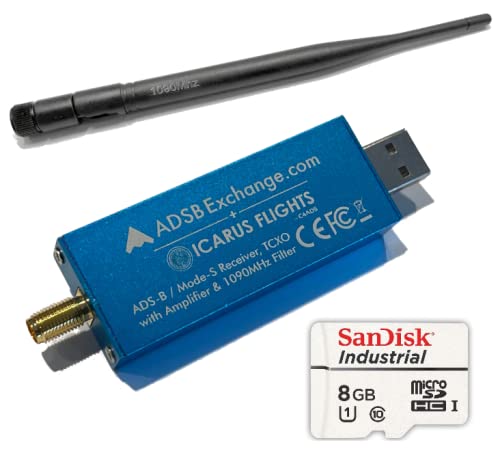
The ADS-B receiver uses a RTL-SDR inside
5. Receiving Weather Satellite Images
Weather satellites, such as those operated by NOAA, continuously broadcast weather images, which can be received with an SDR and the right antenna.
By decoding these signals, you can view real-time weather patterns and data directly from satellites. It’s an incredible tool for weather enthusiasts and anyone curious about satellite technology.
6. Listening to Marine and Maritime Traffic
With SDR, you can also tune into the VHF marine band used by ships and boats for communication.
If you’re near the coast or a major waterway, you can hear everything from ship-to-ship communications to weather alerts and safety announcements. This makes SDR a fantastic tool for maritime enthusiasts and anyone interested in marine safety.
7. Exploring Utility Stations
Utility stations are non-broadcast signals that serve a specific purpose, such as aviation weather, maritime communications, and time signals. These are popular among SDR hobbyists for their unique content. Some of these stations transmit Morse code, weather updates, and even specialized data for certain industries.
With SDR, you can easily tune into these and see what’s happening behind the scenes in different sectors.
8. Decoding Digital Modes (Ham Radio Digital Modes)
Ham radio isn’t just about voice communication—there are also various digital modes that allow operators to exchange data, text, and even images. Modes like FT8, PSK31, and RTTY are especially popular for long-distance communication.
With SDR, you can decode these digital signals, even if they’re in Morse code, and view conversations happening all around the world.
9. Exploring Emergency and Public Safety Communications
In some regions, SDR can pick up emergency and public safety communications, such as police, fire, and EMS. Keep in mind that many of these communications are now encrypted for privacy, so availability varies by location.
However, in areas where analog channels are still used, SDR can provide a window into emergency operations and real-time public safety updates.
10. Research and Education
SDR isn’t just for hobbyists—it’s also a valuable tool for research and education.
Universities, researchers, and engineers use SDR to study radio wave behavior, test new communication technologies, and explore signal processing techniques.
It’s an affordable way for students to experiment with complex radio frequencies and explore concepts that were once confined to high-end labs.
11. DIY Projects and Experiments
One of the most exciting applications of SDR is how it enables DIY projects and experiments. Because SDR is so flexible, hobbyists and makers can use it to create custom setups, build antennas, explore radio astronomy, or even experiment with creating their own radio signals. With SDR, the only limit is your imagination!

Getting Started with SDR
If these applications have sparked your interest, it’s easy to start exploring with SDR. All you need is an SDR device (like the RTL-SDR Blog V4 or SDRplay RSP1A), an antenna, and some free SDR software like SDR# or GQRX.

From there, you can jump into any of the applications we’ve talked about, tailoring your setup as you go.
Summary
Software-Defined Radio opens up an incredible world of listening opportunities, learning experiences, and hands-on experimentation. Whether you’re tuning into ham radio, tracking aircraft, or listening to weather satellites, SDR allows you to connect to the airwaves in ways that were once limited to specialized equipment.
And the best part? SDR is constantly evolving, with new applications and improvements being developed all the time. So go ahead, plug in your SDR, tune in, and enjoy the endless possibilities of the radio spectrum!
